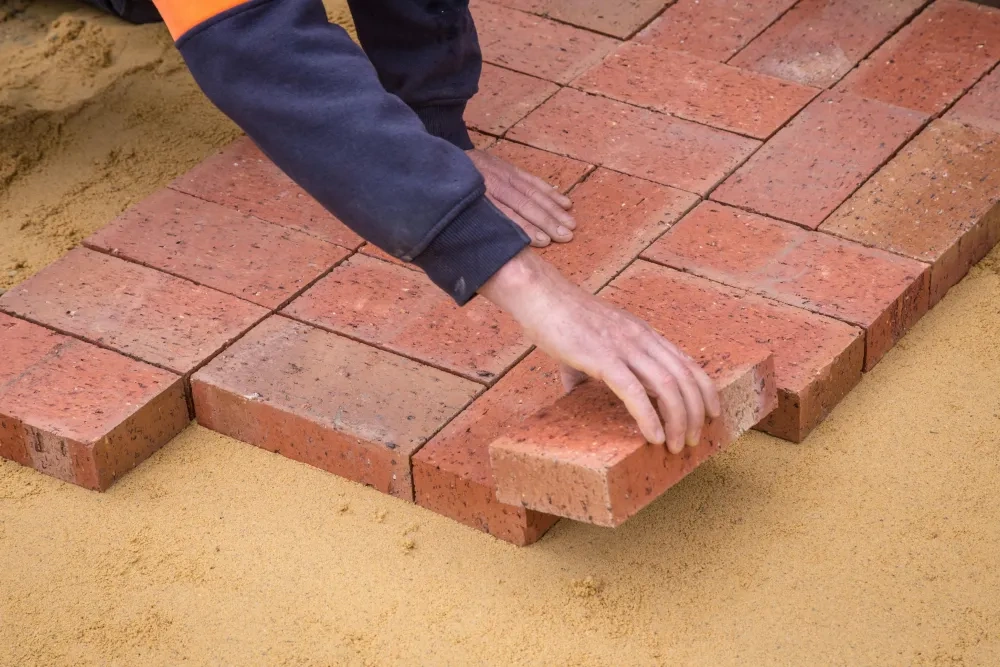
How a hardscape gets built, and why the base decides everything
Almost everything that goes wrong with a patio or a wall was decided before the first stone was set. This is the sequence, from excavation to the last joint.
After a heavy spring storm, most Wichita yards hold water somewhere for a while. That on its own is not a fault. What separates a wet week from a drainage problem is not how much water appeared — it is where it went, how long it stayed, and whether the same thing happens every time.
This is a diagnostic guide rather than a sales page. Some of what follows is worth acting on quickly. Some of it is a yard behaving normally in clay, and the right answer is to leave it alone.
Sandy or loamy ground absorbs water and moves it downward. Heavy clay largely does not. It takes water in slowly, holds it once it has it, and releases it slowly — which means that on a clay lot, surface water is mostly going wherever the surface sends it, not into the ground beneath it.
Two consequences follow, and they explain nearly everything on this page. Fall matters more here than in soil that drains, because infiltration is not going to rescue a flat area. And saturated clay swells, then shrinks as it dries, and freezes and lifts in winter — so water that sits against a structure is not just wet, it is applying force to it.
The repetition is the diagnostic, not the puddle. Water pooling in one place every single time means the grade sends it there and nothing gives it anywhere else to go. That will not improve on its own, and a dry summer only postpones it.
This is the one to treat as urgent. Ground should fall away from a foundation, and water standing along a wall or a patio edge that abuts the house is the most expensive version of this problem to ignore. In most cases the cause is close to hand: a downspout discharging beside the wall, or ground that has settled back toward the house over the years. Where it happens in the narrow strip down the side of the house, the fix has to fit in a few feet of ground — our guide to landscape design for the side of your house works through it.
A patch that is thin, mossy or bare while the rest of the lawn is fine is often reported as a lawn problem and treated with seed. Repeatedly reseeding a low spot is treating a symptom — the grass is failing because the ground under it is saturated for longer than the roots can tolerate.
Thin deposits of soil spread across a path or a patio after a storm mean water is moving fast enough to carry material, and it is taking that material from somewhere. On a slope, look for small channels forming and for tree roots becoming more visible year on year. That is erosion in progress and it accelerates.
Water building up behind a wall with nowhere to go is the number one cause of retaining wall failure. Efflorescence, persistent damp, courses that have gone out of line, or any lean that was not there before are all signals that the drainage behind the structure is not working. This is a structural issue rather than a cosmetic one — what sits behind a wall is what holds it up.
Interior symptoms usually have an exterior cause, and it is almost always surface water that was allowed to collect against the house rather than groundwater rising to meet it. Worth investigating outside before spending anything inside.
Four causes account for the large majority of what we are called to look at.
Drainage is not optional. Skipping it guarantees failure.
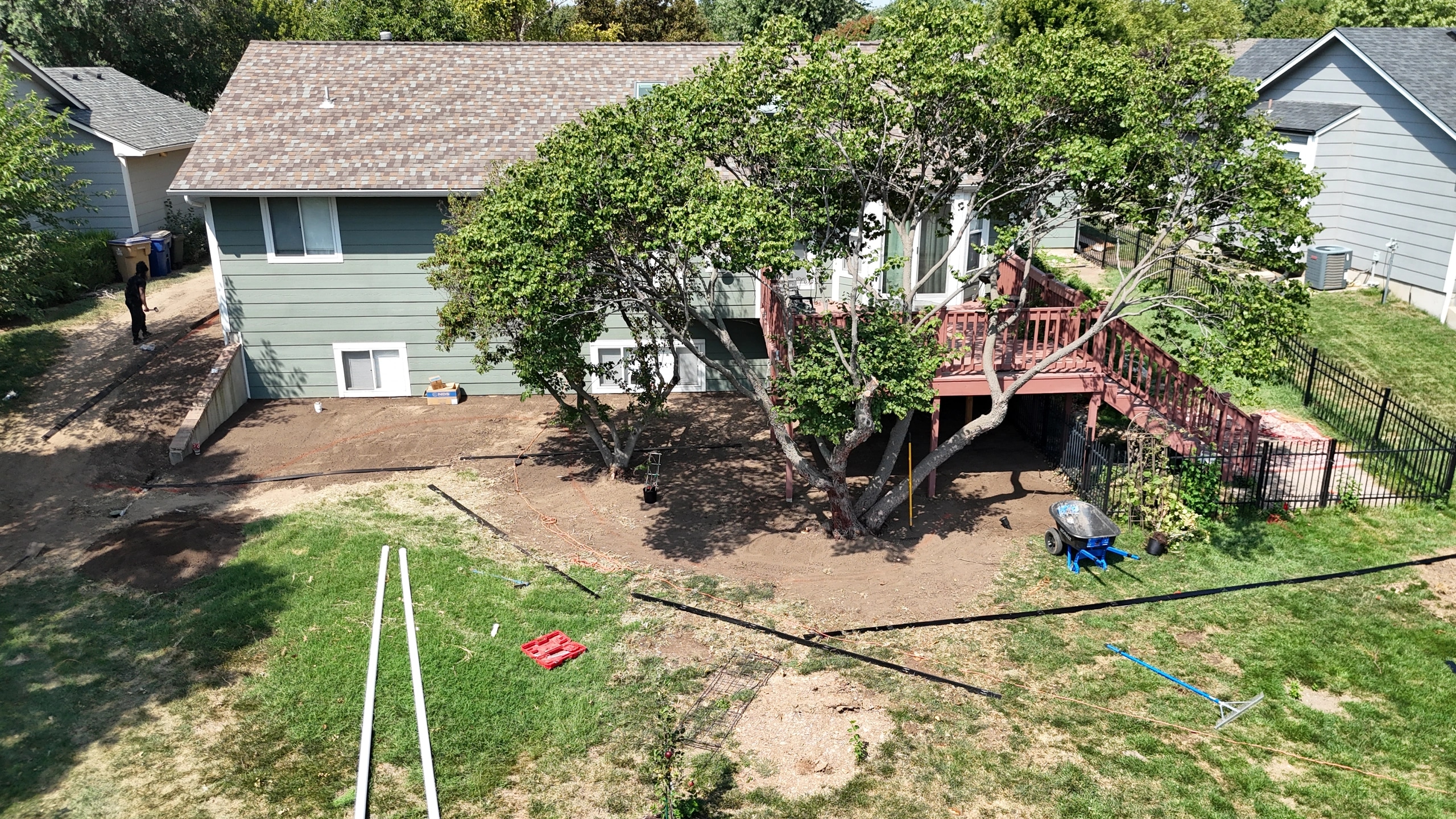
Roughly in order of scope. Most properties need one or two of these, not all of them.
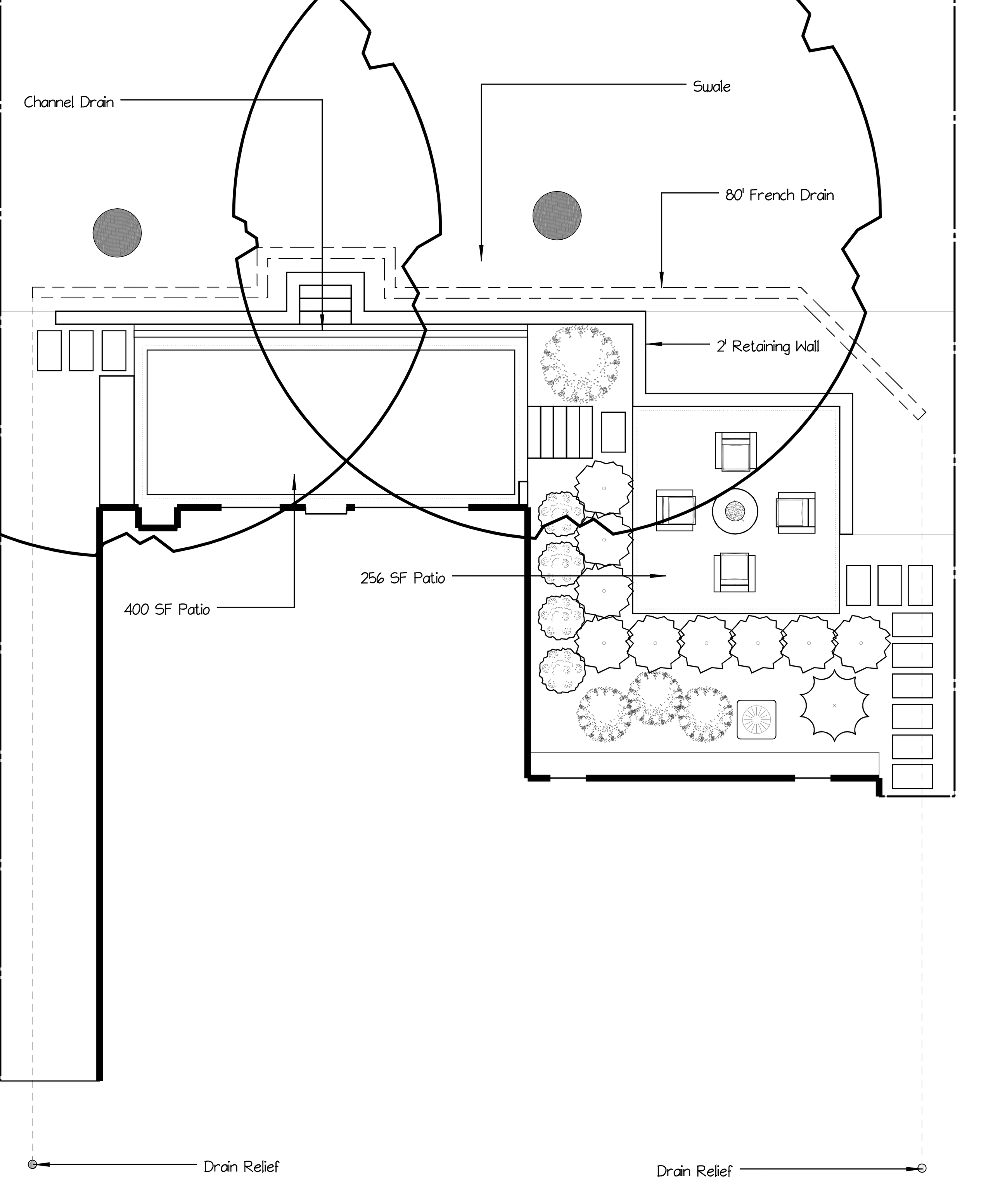
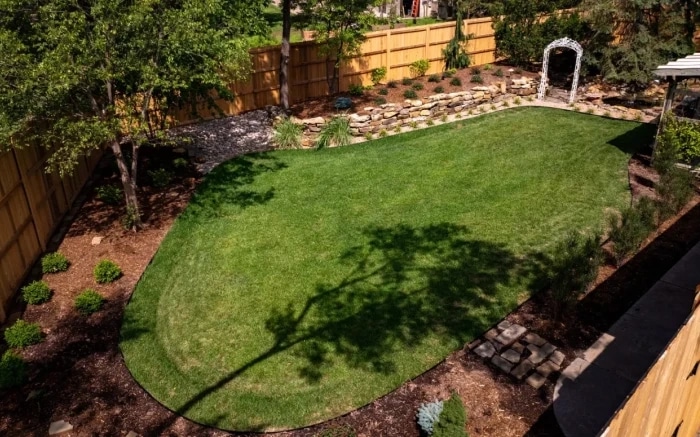
Each of these gets tried often enough to be worth naming, and each of them costs money without changing the outcome.
You can get most of the way there yourself, and it costs nothing but a raincoat. Go out during the next real downpour and watch. Where does water arrive from, where does it collect, and where does it leave? Then go back an hour after it stops and note what is still standing, and again the following day.
A single observed storm tells you more than any amount of looking at a dry yard, because the evidence disappears. If what you see is water heading for the house, or standing more than a day in the same place every time, that is worth a conversation — tell us what you saw and we will tell you whether it needs groundwork or a downspout.
Where the lot sits matters as well. On the east side of Wichita, Fourmile Creek runs through the 67230 ZIP code and many neighborhoods are built around ponds; our page on landscaping in East Wichita covers the grading and drainage work we do there.
Almost everything that goes wrong with a patio or a wall was decided before the first stone was set. This is the sequence, from excavation to the last joint.
Most design advice is written for a climate that is not this one. This is how a plan gets made for a Kansas property, and why the drawing is worth paying for before anybody quotes the build.